Never Too Late: Veteran Finds Healing Decades After Sexual Trauma
4-minute read
Never Too Late: Veteran Finds Healing Decades After Sexual Trauma
4-minute read
For decades, Liz didn’t seek help for the effects of the daily sexual harassment and assault she experienced in the Army in the late 1970s. For all those years, she had tried to repress the memories. She also didn’t connect those traumas to her present-day challenges. And she had been conditioned to believe that people shouldn’t need to ask for help.
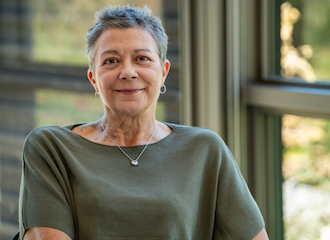
“I was going downhill fast.” Veteran on Effects of Military Sexual Trauma
“Making that first call is really hard,” Liz says.
But as Liz’s experience after making that call shows, it’s never too late to reach out for help dealing with the impact of military sexual trauma (MST).
VA provides free care for mental and physical health conditions related to MST. It doesn’t matter how long ago the MST happened, or whether it was ever reported or documented. You also don’t need a disability rating or an official classification as a Veteran. Almost everyone who served is eligible.
It’s also never too late in the sense that, no matter how many years have passed, the mental health care you receive can help you recover from the effects of MST and improve your quality of life. That’s what it did for Liz.
Enduring a daily barrage
Liz’s challenges as a woman joining the Army in 1977 began in basic training, when a drill sergeant declared to everyone, “For you girls out there, you need to know that we do not believe there's any place in this man's Army for women."
“We had been instantly othered by that drill sergeant,” Liz says.
After persisting through basic training, she was assigned to a maintenance company in which she became the first woman. There weren’t many women on the entire base either, and Liz says she felt under constant attack.
“There was a lot of sexual harassment and grabbing and groping,” Liz recalls. “My 3 years in the military were defined by my experiences of daily minute-to-minute sexual harassment and assault.”
Bottling it up
When Liz left the Army in 1980, she tried to put that time and those experiences behind her. “I stopped talking about my military service because I was laughed at by men,” she says. She didn’t even think of herself as a Veteran: “I was just a girl who'd been in the Army.”
She also didn’t connect her post-service physical or mental health challenges to the harassment and assault she experienced during her service. She didn’t even realize it in 1993, when she began her decades-long career in the field of domestic violence and sexual assault.
The disconnect created an internal pressure cooker. “I just kept stuffing everything down further and further,” she says.
Making the call
As the years and decades passed, Liz’s symptoms worsened: sleepless nights, anxiety, anger, and depression.
“I realized that I needed to do something, because I was going downhill fast,” she says. That’s when she decided to contact VA to make a mental health care appointment, putting her on a new trajectory.
Since that call, VA has helped her heal through talk therapy, cognitive behavioral therapy, and other types of therapy for posttraumatic stress disorder (PTSD). She especially appreciated what she learned from a therapist who served in the Marine Corps.
“What I appreciated about her was the way she took me through what happened to me, how my experiences connected to how I behave, and how I think and believe today,” Liz explains. That understanding, in turn, contributed to her ability to manage how the past affects her present.
It could only happen by making the call.
“Recognizing that you need help and making the phone call are the moments in your mental health journey that you need to be proud of,” Liz says, “because you did it.”